Every October, something happens at the southern tip of New Jersey that most people who live twenty minutes away have never witnessed. The sky fills with hawks. Not one or two — thousands. Broad-winged hawks, sharp-shinned hawks, Cooper's hawks, peregrines, ospreys, bald eagles, merlins. They stream south along the peninsula, hit the edge of the continent, hesitate at the wide expanse of the Delaware Bay they'd rather not cross, and stack up over Cape May Point in numbers that have to be seen to be understood.
This is why birders from around the world — from the United Kingdom, Japan, Australia, and every corner of North America — make pilgrimages to Cape May Point State Park. And it's why the Cape May Bird Observatory's hawk watch platform, located at the east end of the parking lot on Lighthouse Avenue, hosts more than 100,000 visitors each season.
Why Cape May Point
The geography does the work. New Jersey is a long peninsula pointing southwest, and Cape May Point is its tip. Migrating birds traveling south along the Atlantic coast — songbirds, raptors, shorebirds, waterfowl — follow the coastline and eventually find themselves funneled onto a narrowing strip of land with open water on three sides. The Delaware Bay to the west presents a barrier most raptors prefer not to cross. So they wait, circle, concentrate, and fill the sky over the Point in numbers that defy casual description.
Banding studies conducted in Cape May Point have documented the importance of the Atlantic coast as a fall migration route for raptors specifically. The peninsula acts like a natural funnel, collecting birds from a broad front and concentrating them at its tip — which is why a single morning at the hawk watch platform can produce sightings of a dozen species of raptors in numbers that would be a season's highlight anywhere else in the country.
"More than 400 different species have been recorded on the peninsula during fall migration. It is widely regarded as the epicenter of fall migration in North America."
What You'll See and When
The migration story at Cape May unfolds across the entire calendar, but fall is the main event. September brings the first wave — songbirds migrating at night that pour off the ocean at dawn and land in the coastal scrub and woodland, exhausted and hungry, creating what birders call a "fallout." The fields at Higbee Beach Wildlife Management Area, just north of the Point along the Delaware Bay shore, are the prime spot for this phenomenon: warblers, thrushes, vireos, and tanagers moving through the hedgerows in numbers that can overwhelm even experienced observers.
By mid-September the raptor migration turns on in earnest. The hawk watch platform at Cape May Point State Park runs daily counts from September 1 through approximately December 10, staffed by counters and associate naturalists who can help visitors identify what's passing over. Northwesterly winds following a cold front typically produce the best flights, but as any veteran of the hawk watch will tell you, any day can be extraordinary.
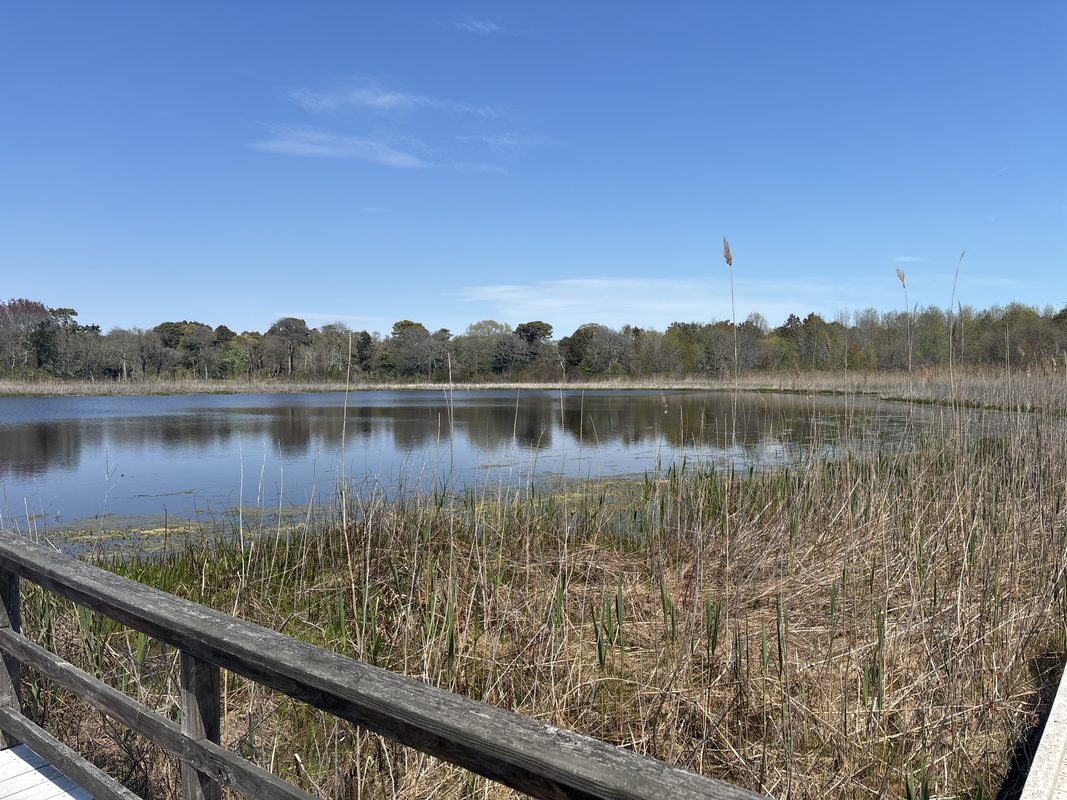 The freshwater ponds at Cape May Point State Park — essential habitat for waterfowl, shorebirds, and songbirds throughout the migration season.
October is the peak month for diversity — shorebirds on the beaches, sea ducks offshore, lingering warblers in the dunes, and the daily raptor show overhead. By late September, 25 species of shorebirds are often present simultaneously at Stone Harbor Point, including Red Knot, American Oystercatcher, and Marbled Godwit. The seawatch at Avalon's oceanfront — where official counts take place — can produce hundreds of thousands of birds passing a single spot in a season.
The Spring Migration
Fall gets the attention, but spring has its own spectacular argument. The Delaware Bay shore in late May hosts one of the most dramatic wildlife events on the East Coast: the convergence of horseshoe crabs and shorebirds. Horseshoe crabs emerge by the millions on Delaware Bay beaches to lay their eggs at the high tide line. Red Knots, Ruddy Turnstones, and Semipalmated Sandpipers — some of them flying nonstop from South America — descend on these beaches to gorge on the eggs, doubling their body weight in a matter of days before continuing north to their Arctic breeding grounds. The timing is precise and the stakes are existential. Watching it is one of the more humbling experiences in the natural world.
How to Experience It
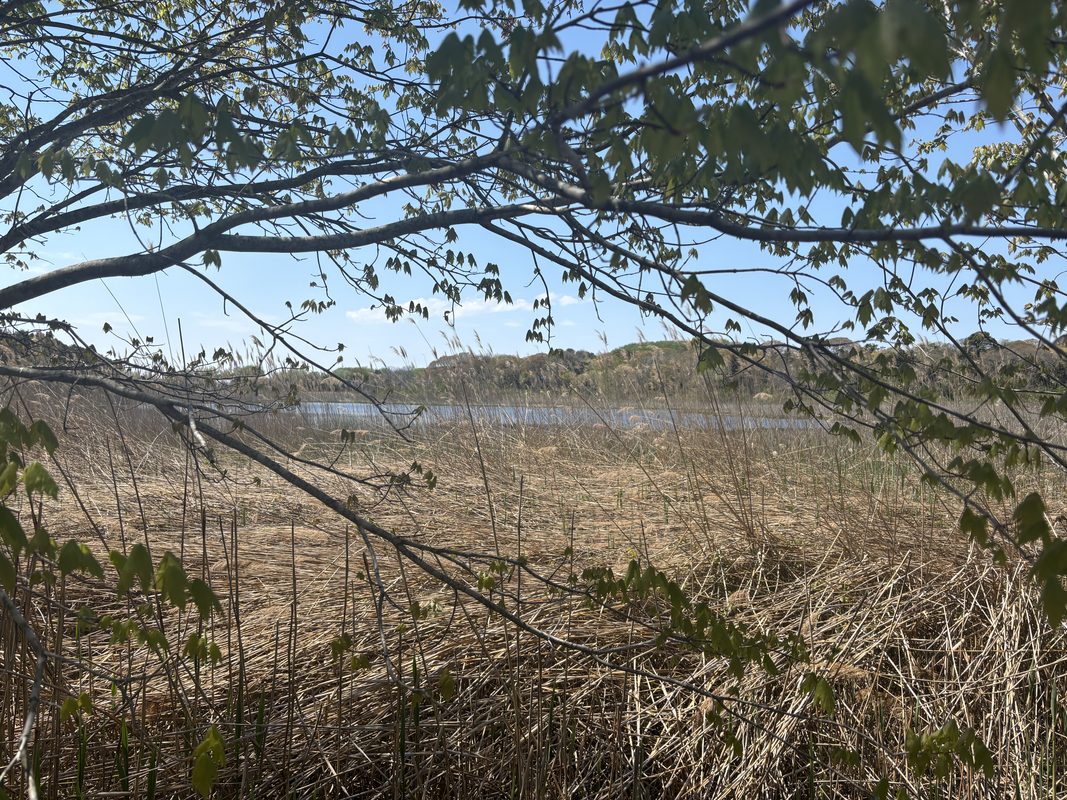 The varied coastal scrub and marsh habitat along the Cape May Point trail system — where warbler fallouts concentrate during September migration.
The Cape May Bird Observatory runs guided walks, special field trips, and an annual Cape May Autumn Weekend festival that draws birders from across the country. The Northwood Center on East Lake Drive is the base of operations — staff can orient first-time visitors, provide checklists, and point you toward the best spots on any given day depending on wind direction and what's moving.
For the uninitiated, the hawk watch platform is the ideal entry point. Show up on a clear morning in October with a northwest wind behind you. Within twenty minutes you'll understand why birders call it the Miracle Mile — and why people travel from the other side of the planet to stand on this particular patch of New Jersey.
Cape May Point State Park itself offers marked, easy-to-follow trails through varied habitats — coastal dunes, freshwater ponds, salt marsh, and coastal scrub — that produce sightings across every season. The lighthouse, the ponds, and the beach at the Point all have their own regular cast of birds. Even a casual walk on a weekday morning in September will produce more species than most people see in a month anywhere else.
This is, without question, one of the great natural spectacles of the Eastern United States. It happens every year, forty-five minutes from Philadelphia, two hours from New York. Most people have no idea it's there.